Benefits of Asset Monetization
UNLOCK THE VALUE OF YOUR REAL ESTATE ASSET
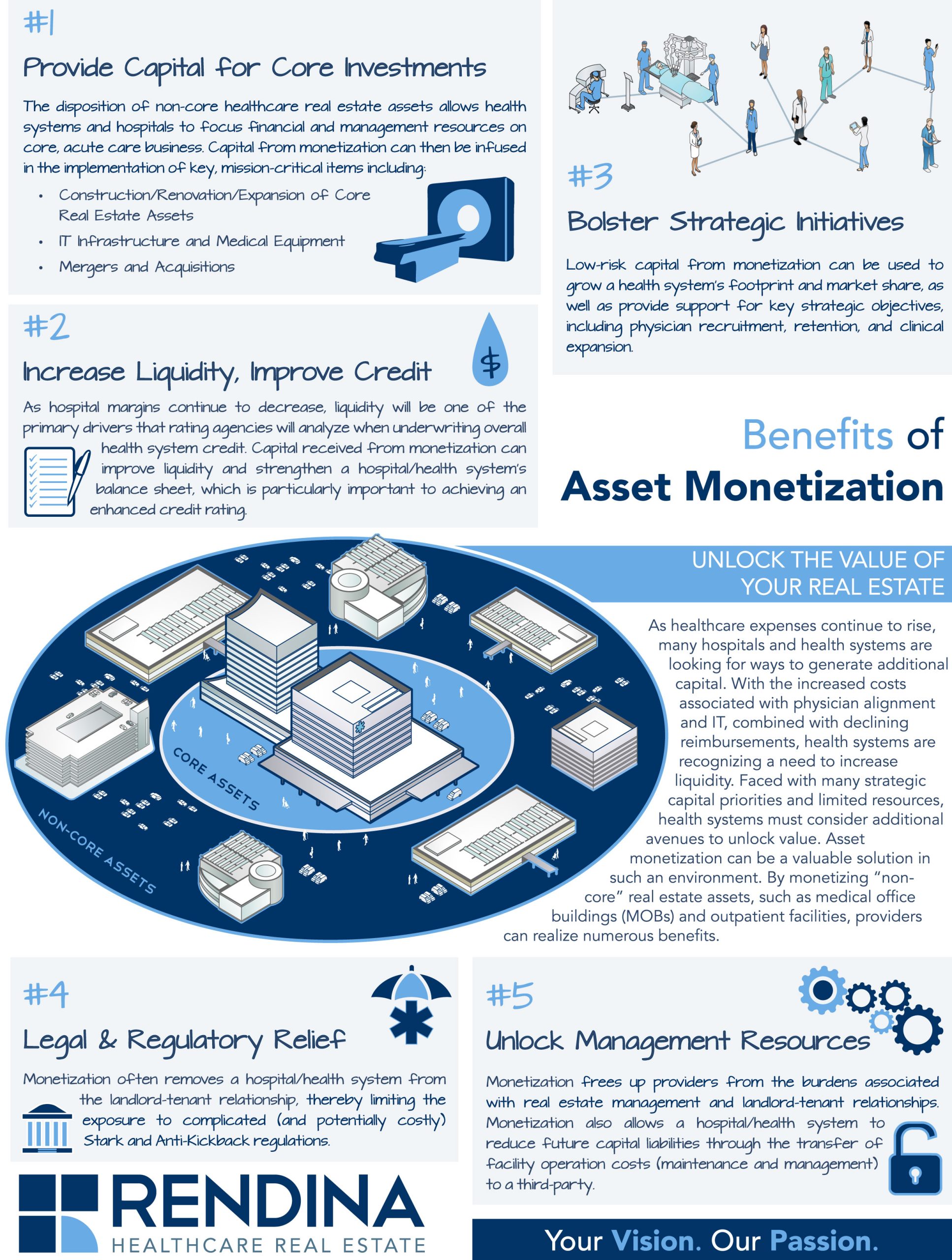
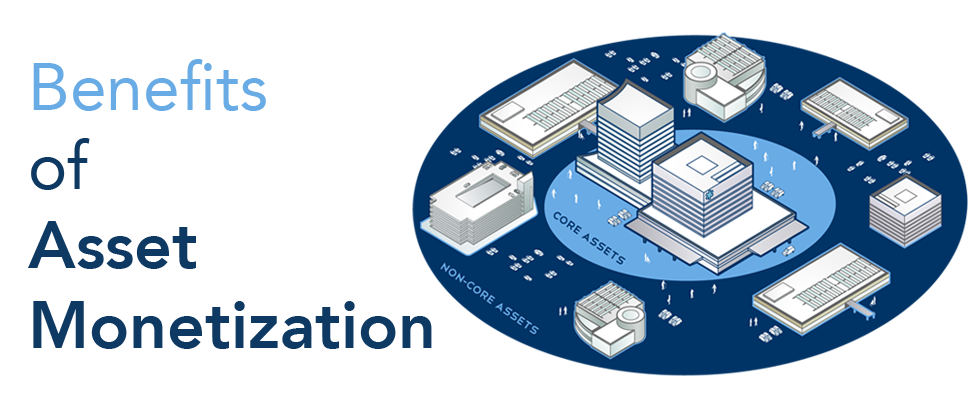
As healthcare expenses continue to rise, many hospitals and health systems are looking for ways to generate additional capital. With the increased costs associated with physician alignment and IT, combined with declining reimbursements, health systems are recognizing a need to increase liquidity. Faced with many strategic capital priorities and limited resources, health systems must consider additional avenues to unlock value. Asset monetization can be a valuable solution in such an environment. By monetizing “non-core” real estate assets, such as medical office buildings (MOBs) and outpatient facilities, providers can realize numerous benefits.
[mobile_only]
[button link=”https://rendina.com/wp-content/uploads/2016/01/Asset-Monetization-Infographic-MASTER-RGB-9.17.14.pdf” size=”large” variation=”deepblue” align=”center” target=”blank”]Download the Infographic Here[/button]
[fancy_box]
#1
Provide Capital for Core Investments
The disposition of non-core healthcare real estate assets allows health systems and hospitals to focus financial and management resources on core, acute care business. Capital from monetization can then be infused in the implementation of key, mission-critical items including:
- Construction/Renovation/Expansion of Core Real Estate Assets
- IT Infrastructure and Medical Equipment
- Mergers and Acquisitions
[/fancy_box]
[fancy_box]
#2
Increase Liquidity, Improve Credit Rating
As hospital margins continue to decrease, liquidity will be one of the primary drivers that rating agencies will analyze when underwriting overall health system credit. Capital received from monetization can improve liquidity and strengthen a hospital/health system’s balance sheet, which is particularly important to achieving an enhanced credit rating.
[/fancy_box]
[fancy_box]
#3
Bolster Strategic Initiatives
Low-risk capital from monetization can be used to grow a health system’s footprint and market share, as well as provide support for key strategic objectives, including physician recruitment, retention, and clinical expansion.
[/fancy_box]
[fancy_box]
#4
Legal & Regulatory Relief
Monetization often removes a hospital/health system from the landlord-tenant relationship, thereby limiting the exposure to complicated (and potentially costly) Stark and Anti-Kickback regulations.
[/fancy_box]
[fancy_box]
#5
Unlock Management Resources
Monetization frees up providers from the burdens associated with real estate management and landlord-tenant relationships. Monetization also allows a hospital/health system to reduce future capital liabilities through the transfer of facility operation costs (maintenance and management) to a third-party.
[/fancy_box]
[/mobile_only]
[desktop_only]
Infographic

[button link=”https://rendina.com/wp-content/uploads/2016/01/Asset-Monetization-Infographic-MASTER-RGB-9.17.14.pdf” size=”large” variation=”deepblue” align=”center” target=”blank”]Download the Infographic Here[/button]
[fancy_box]
[dropcap1 textColor=”#69abe5″]1[/dropcap1][dropcap2 textColor=”#023266″]Provide Capital for Core Investments[/dropcap2]
The disposition of non-core healthcare real estate assets allows health systems and hospitals to focus financial and management resources on core, acute care business. Capital from monetization can then be infused in the implementation of key, mission-critical items including:
- Construction/Renovation/Expansion of Core Real Estate Assets
- IT Infrastructure and Medical Equipment
- Mergers and Acquisitions
[/fancy_box]
[fancy_box]
[dropcap1 textColor=”#69abe5″]2[/dropcap1][dropcap2 textColor=”#023266″]Increase Liquidity, Improve Credit Rating[/dropcap2]
As hospital margins continue to decrease, liquidity will be one of the primary drivers that rating agencies will analyze when underwriting overall health system credit. Capital received from monetization can improve liquidity and strengthen a hospital/health system’s balance sheet, which is particularly important to achieving an enhanced credit rating.
[/fancy_box]
[fancy_box]
[dropcap1 textColor=”#69abe5″]3[/dropcap1][dropcap2 textColor=”#023266″]Bolster Strategic Initiatives[/dropcap2]
Low-risk capital from monetization can be used to grow a health system’s footprint and market share, as well as provide support for key strategic objectives, including physician recruitment, retention, and clinical expansion.
[/fancy_box]
[fancy_box]
[dropcap1 textColor=”#69abe5″]4[/dropcap1][dropcap2 textColor=”#023266″]Legal & Regulatory Relief[/dropcap2]
Monetization often removes a hospital/health system from the landlord-tenant relationship, thereby limiting the exposure to complicated (and potentially costly) Stark and Anti-Kickback regulations.
[/fancy_box]
[fancy_box]
[dropcap1 textColor=”#69abe5″]5[/dropcap1][dropcap2 textColor=”#023266″]Unlock Management Resources[/dropcap2]
Monetization frees up providers from the burdens associated with real estate management and landlord-tenant relationships. Monetization also allows a hospital/health system to reduce future capital liabilities through the transfer of facility operation costs (maintenance and management) to a third-party.
[/fancy_box]
[/desktop_only]